
Core Cybersecurity Habits to Model at Home
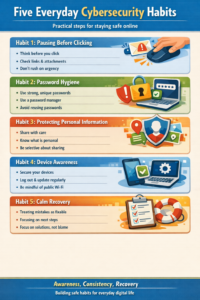
5 Core Digital Safety Habits
Habit 1: Pausing Before Clicking
Many digital risks begin with speed. Links, attachments, and pop-up messages often rely on urgency to prompt quick action. Pausing—even briefly—creates space for judgment.
This habit includes:
- Checking links and attachments before opening them
- Not acting on urgency alone, especially when a message pressures immediate response
A short pause can interrupt automatic behaviour and allow questions like,
“Do I recognize this sender?” or “Was I expecting this?”
Habit 2: Password Hygiene
Passwords protect access, but they are also easy to reuse out of convenience. Good password habits reduce the chance that one compromised account affects others.
This habit includes:
- Using unique passwords for important accounts
- Treating password managers as helpful tools rather than burdens
Password managers reduce cognitive load and make secure practices easier to maintain over time.
Habit 3: Protecting Personal Information
Personal information is not limited to obvious details like addresses or phone numbers. It can also include location data, routines, photos, and identifiers that reveal patterns.
This habit includes:
- Understanding what counts as personal data
- Being selective about what is shared, rather than secretive or fearful
The goal is thoughtful sharing, not complete withdrawal from digital spaces.
Habit 4: Device Awareness
Devices are extensions of daily life, and awareness of how they are used matters for security.
This habit includes:
- Logging out of accounts when appropriate
- Keeping software and apps updated
- Knowing where and how devices are used, especially in shared or public settings
These practices reduce risk without requiring constant vigilance.
Habit 5: Calm Recovery
Mistakes happen—even with good habits in place. How adults respond to these moments shapes how children learn to manage risk.
This habit includes:
- Treating mistakes as fixable rather than catastrophic
- Focusing on next steps instead of blame
Calm recovery reinforces the idea that cybersecurity is manageable and that learning continues even when something goes wrong.
Together, these habits support capable participation in digital spaces. They emphasize awareness, consistency, and recovery—helping families approach cybersecurity with confidence rather than fear.
Reflection
- Choose two habits to emphasize at home this month.
- How will you model them out loud?
- How will you normalize learning rather than perfection?