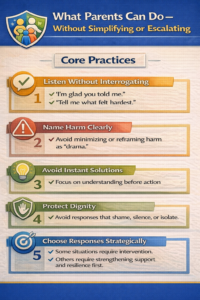
What Parents Can Do—Without Simplifying or Escalating
Reading: Core Practices
When children experience harm—especially in complex social or digital situations—parents often feel pressure to act quickly. While this impulse comes from care, effective support requires balance: taking concerns seriously without oversimplifying them and responding thoughtfully without escalating harm.
The following core practices help parents support children in ways that preserve dignity, strengthen resilience, and keep communication open.
1. Listen Without Interrogating
The first response sets the tone. Children are more likely to keep sharing when they feel heard rather than questioned or cross-examined.
Helpful language includes:
- “I’m glad you told me.”
- “Tell me what felt hardest.”
These statements signal safety and trust. They invite reflection rather than defense, and they allow the child to share at their own pace.
2. Name Harm Clearly
Avoid minimizing what happened or reframing harm as “drama,” “misunderstanding,” or “kids being kids.” When harm is downplayed, children may feel dismissed or doubt their own perceptions.
Naming harm clearly does not mean escalating it—it means acknowledging reality. Clear language helps children understand that what they experienced matters and deserves attention.
3. Avoid Instant Solutions
Resist the urge to immediately fix, confront, or advise. Quick solutions can shut down understanding and make children feel rushed or unheard.
Instead, focus first on:
- Understanding what happened
- How the child experienced it
- What they need in the moment
Action is often more effective when it follows clarity rather than urgency.
4. Protect Dignity
Responses that shame, silence, or isolate—even unintentionally—can deepen harm. Children need to know that their dignity remains intact, regardless of what happened.
Protecting dignity means:
- Avoiding blame or ridicule
- Respecting the child’s privacy
- Supporting agency rather than control
When dignity is preserved, children are more able to recover and engage.
5. Choose Responses Strategically
Not every situation requires the same response. Some moments call for direct adult intervention, especially when safety is at risk. Others are best addressed by strengthening the child’s support system and resilience first.
Strategic responses consider:
- The severity and pattern of harm
- Power dynamics involved
- The child’s emotional state and capacity
The goal is not to do nothing or to do everything, but to do what best supports the child’s well-being and long-term growth.
Key Insight
Supporting children effectively means responding with clarity, steadiness, and intention.
When parents listen carefully, name harm accurately, and act strategically, they help children feel protected without feeling powerless—and supported without being overwhelmed.