
Supporting Children in Different Roles
Reading: Supporting Children in Different Roles
Bullying situations rarely involve only one experience or one role. Children may be targeted, may witness harm, or may engage in bullying behaviours themselves. Each role comes with different challenges and implications.
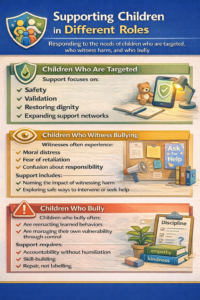
Children Who Are Targeted
When children are targeted by bullying, support must prioritise their sense of safety and worth. The focus is not on making them tougher or more resilient through endurance, but on restoring stability and dignity.
Effective support centres on:
- Safety, ensuring the child is protected from ongoing harm
- Validation, clearly acknowledging that what happened matters and is not acceptable
- Restoring dignity, helping the child separate their identity from the harm they experienced
- Expanding support networks, connecting the child with trusted adults and peers so they are not isolated
Children who feel believed and supported are more likely to recover, become more resilient, and re-engage.
Children Who Witness Bullying
Witnesses often carry invisible burdens. Even when they are not directly targeted, they may experience:
- Moral distress, knowing something is wrong but feeling unable to act
- Fear of retaliation, worrying that speaking up will make them the next target
- Confusion about responsibility, unsure of what is expected or safe
Support for witnesses includes:
- Naming the impact of witnessing harm, validating that it can be upsetting or stressful
- Exploring safe ways to intervene or seek help, such as reporting concerns, supporting peers privately, or involving trusted adults
Helping witnesses understand their options reduces helplessness and encourages thoughtful action.
Children Who Bully
Children who engage in bullying behaviours and become perpetrators are often managing their own vulnerabilities. Their behaviour may reflect learned patterns, unmet needs, or attempts to gain control in environments where they feel powerless.
Supporting these children requires a careful balance:
- Accountability without humiliation, holding behaviour responsible without shaming
- Skill-building, teaching alternative ways to manage emotions, conflict, and power
- Repair rather than labelling, focusing on making amends and changing behavior rather than defining the child by the harm
When addressed thoughtfully, these situations can become opportunities for growth rather than cycles of punishment and repetition.
A Shared Goal
Across all roles, the goal is not to assign permanent labels, but to interrupt harmful patterns and support healthy development. Children learn most when adults respond with clarity, empathy, and a commitment to repair—helping everyone involved move toward safer and more respectful relationships.
- Which role feels hardest for me to address—and why?