What Parents Can Do—Practically and Calmly
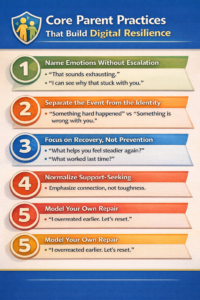
Reading: Core Parent Practices That Build Digital Resilience
Children do not develop resilience from strategies alone. They develop it through repeated experiences of being understood, supported, and guided back to steadiness. The following parent practices help create those experiences—especially in moments of digital stress.
1. Name emotions without escalation
When children are upset, the first and most stabilizing move is often emotional recognition. Naming what a child is feeling—without amplifying it or trying to fix it immediately—helps calm the nervous system and restores a sense of safety.
Simple statements such as:
- “That sounds exhausting.”
- “I can see why that stuck with you.”
communicate understanding without judgment. They tell the child that their reaction makes sense, even if the situation is complex or unresolved. This kind of response lowers emotional intensity and makes thinking possible again.
2. Separate the event from the identity
Digital stress can quickly feel personal. A mistake, conflict, or exclusion online may lead children to believe that something is wrong with them, rather than recognizing that something difficult happened to them.
Parents can interrupt this by separating the event from the child’s identity:
- “Something hard happened.”
rather than:
- “Something is wrong with you.”
This distinction protects self-worth and prevents temporary setbacks from becoming permanent self-judgments.
3. Focus on recovery, not prevention
While prevention matters, resilience grows most through recovery. Children benefit when adults shift attention from “How do we make sure this never happens again?” to “How do we help you feel steady again now?”
Helpful questions include:
- “What helps you feel steadier again?”
- “What worked last time you felt this way?”
This approach reinforces the idea that setbacks are survivable and that children have resources they can draw on.
4. Normalize support-seeking
Resilience is often misunderstood as toughness or independence. In reality, strong resilience includes knowing when and how to seek support.
Parents can normalize this by:
- Emphasizing connection over endurance
- Speaking positively about asking for help
- Modeling reliance on trusted others when appropriate
This teaches children that support is a strength, not a failure.
5. Model your own repair
One of the most powerful lessons parents can offer is how to repair after missteps. When adults acknowledge their own mistakes, they show that regulation and reflection are ongoing processes.
Statements like:
- “I overreacted earlier. Let’s reset.”
demonstrate accountability without shame. They also give children permission to recover, revise, and try again.
Why These Practices Matter
Together, these practices teach children that:
- Emotions can be named without being overwhelming
- Identity is not defined by moments of difficulty
- Recovery is possible and repeatable
- Support is available and encouraged
- Growth includes repair, not perfection
Digital resilience is built in these everyday moments—through steady presence, thoughtful language, and shared recovery.